- The Sleuth
- Posts
- Palantir Expands Into Crypto, Wells Fargo’s Stablecoin Power Grab & More
Palantir Expands Into Crypto, Wells Fargo’s Stablecoin Power Grab & More
Also: Mastercard’s crypto rise against Visa.

Welcome back!
This is J264G and this week I’ve got these titbits for you:
AI Monitoring: Polymarket taps Palantir to monitor trading activity.
Onchain Payments: Mastercard launches Crypto Partner Program.
Crypto Economy: Wells Fargo files WFUSD trademark application.
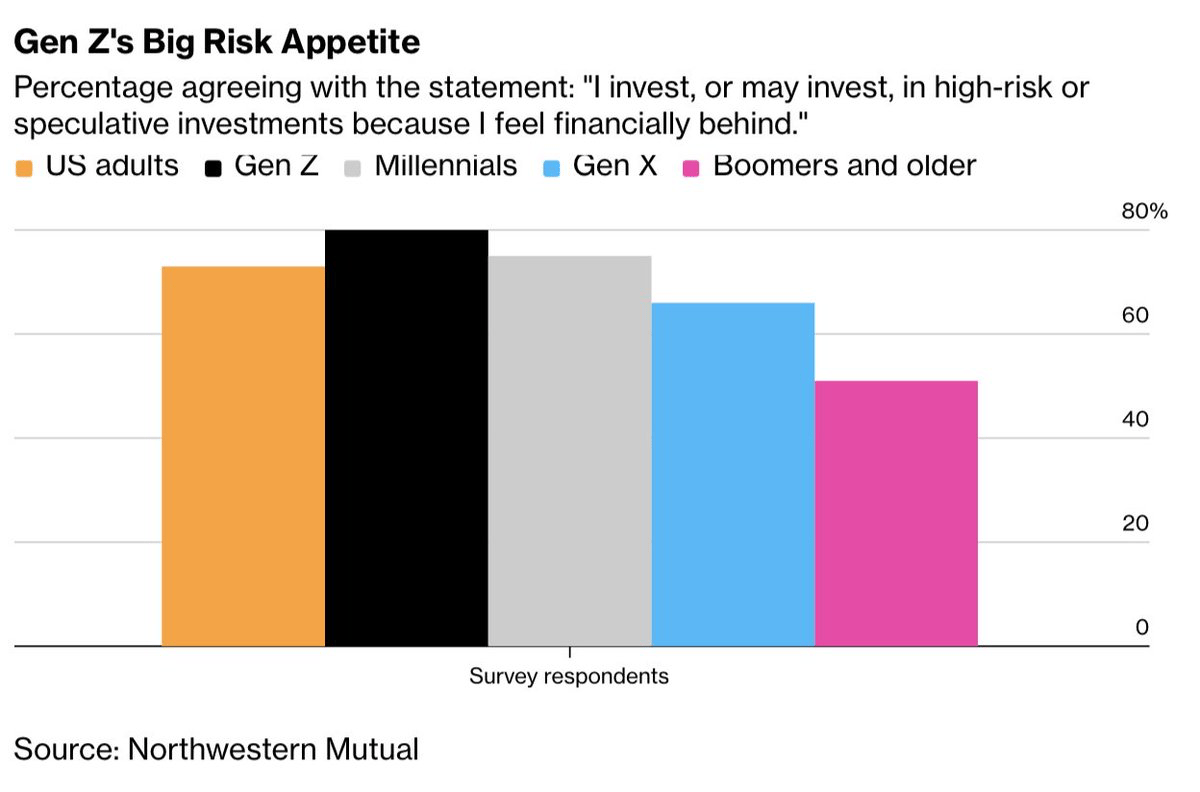
Less buy-and-hold, more spin-the-wheel: Gen Z increasingly believes that riskier trades will get them to their financial goals faster than traditional investing.
Now, let’s jump right into this week’s newsletter!
Click on any underlined heading/hyperlink to learn more.
Spotlight
Machine Markets
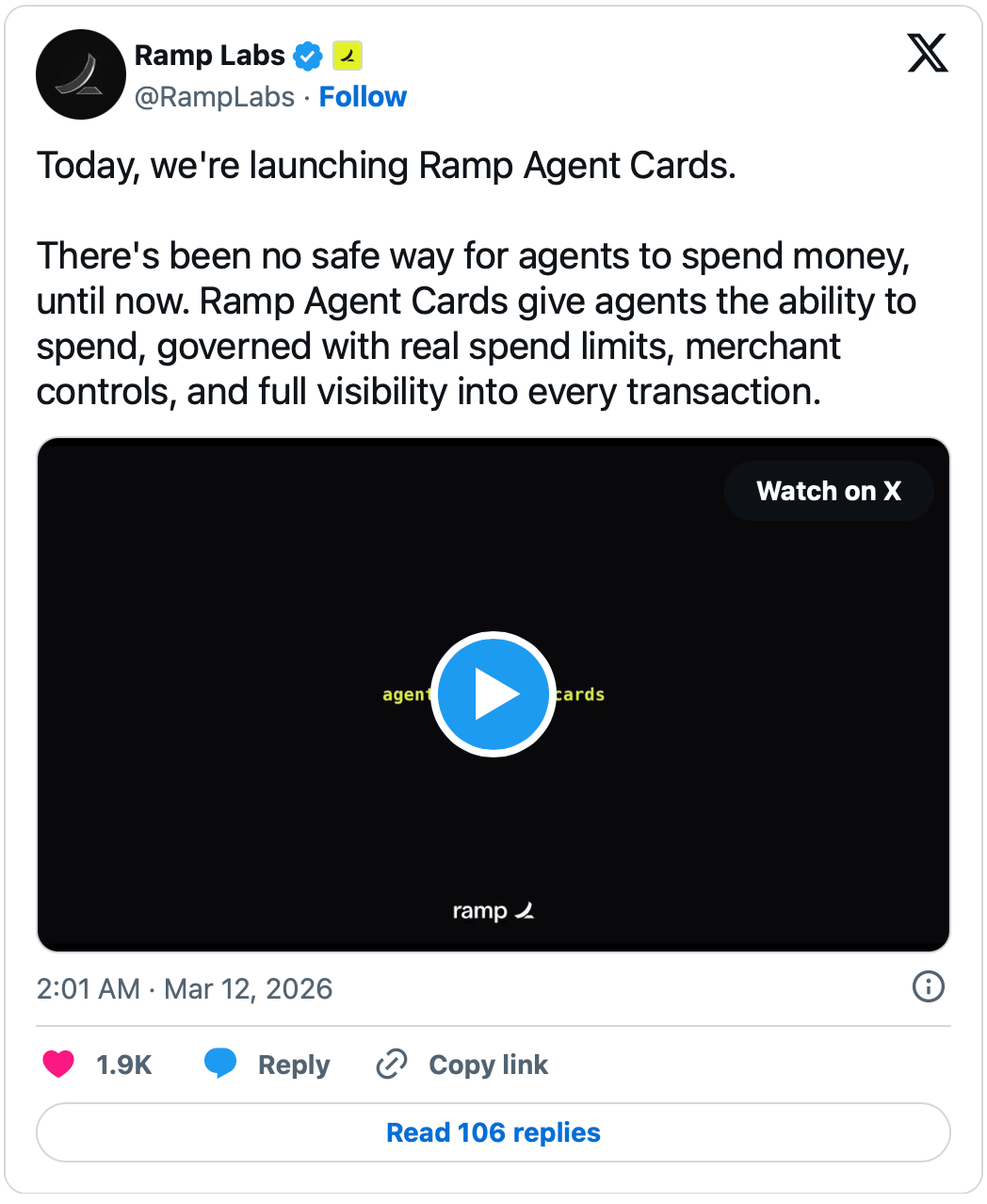
Ramp’s Agent Card is getting a lot of airtime right now.
The attention is not entirely misplaced. Until recently, there was no straightforward or secure way for AI agents to spend money in the real economy. With Ramp’s Agent Card, an AI agent can now book a flight, pay a bill, or order supplies without waiting for a human to approve the transaction.
The excitement reflects a broader tug-of-war over how machines will transact.
In the purely digital economy, stablecoins have quietly become the preferred currency for AI agents. The reason is straightforward: programmability. Sure, virtual cards are programmable up to a point, but they still move at the speed of legacy payment rails. Stablecoins, by contrast, enable self-custodial and fine-grained spending rules that operate at internet speed, around the clock. For AI agents that must transact autonomously and instantly, that difference matters.
But the moment an AI agent steps into the analogue economy, the picture changes. The physical world—airlines, cloud providers, advertising platforms etc.—has yet to fully embrace stablecoins as a routine payment method. Also, persuading every service provider to rebuild their payment stack around stablecoins can be a slow and uncertain undertaking. Ramp’s Agent Card attempts to bridge that divide. Rather than forcing merchants to accept stablecoins, an AI agent can use a card that works anywhere a human might tap or swipe. To the merchant, the transaction looks entirely familiar, even if the buyer is a piece of software rather than a person.
Which system will prevail?
Both.
Despite the speculation surrounding the future of payments, cards and stablecoins increasingly look less like rivals and more like complementary layers of the same emerging machine economy: cards serve agents buying from humans, while stablecoins power agents transacting with code.
Chart Of The Week
News Bites
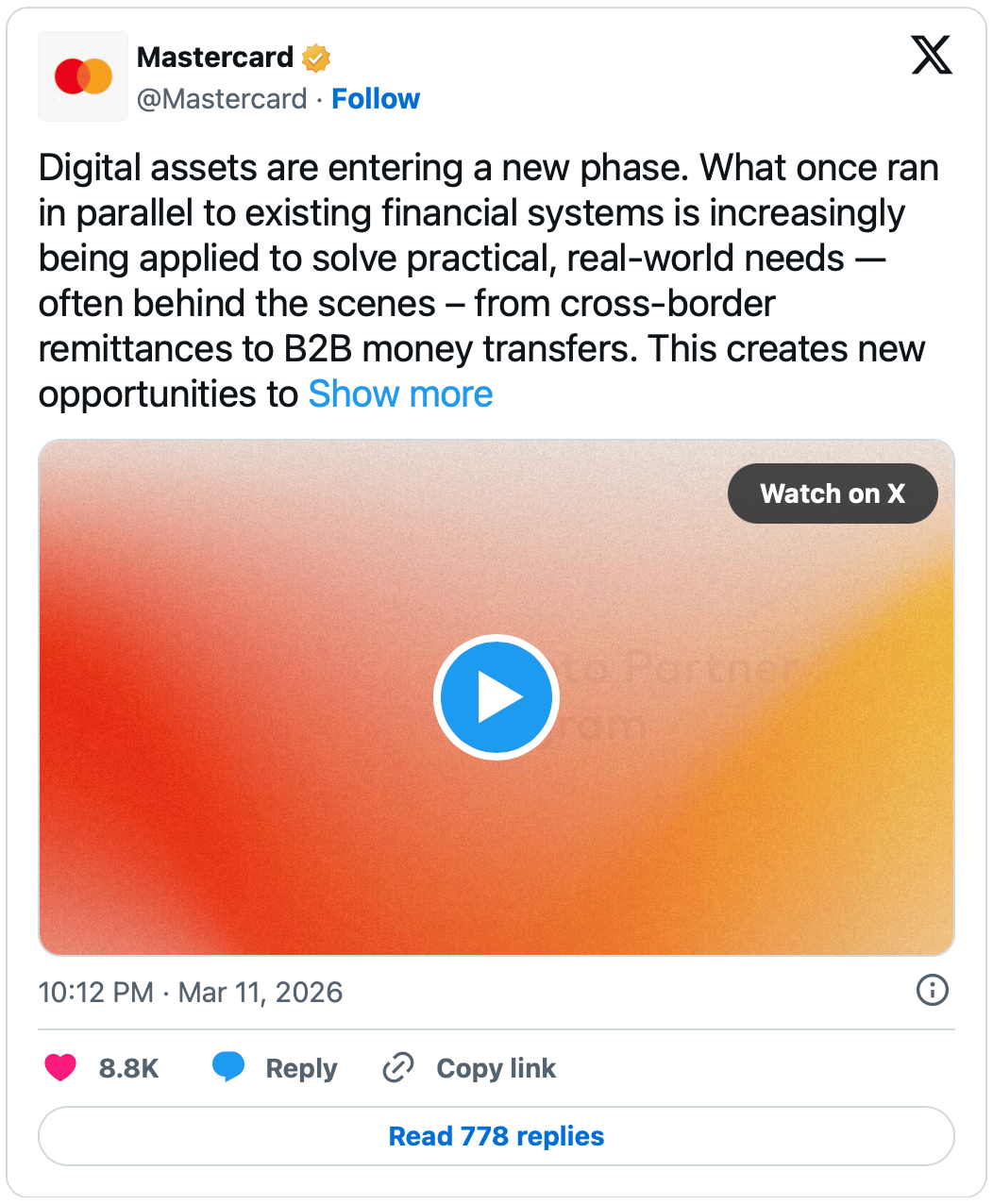
Onchain Payments: Mastercard has launched a Crypto Partner Program bringing together more than 85 crypto firms, payments providers, and financial institutions to collaborate on onchain payments infrastructure. Participants include Solana, Circle, and Rain. However, the programme does not currently include Ethereum, Tether, or Bridge.
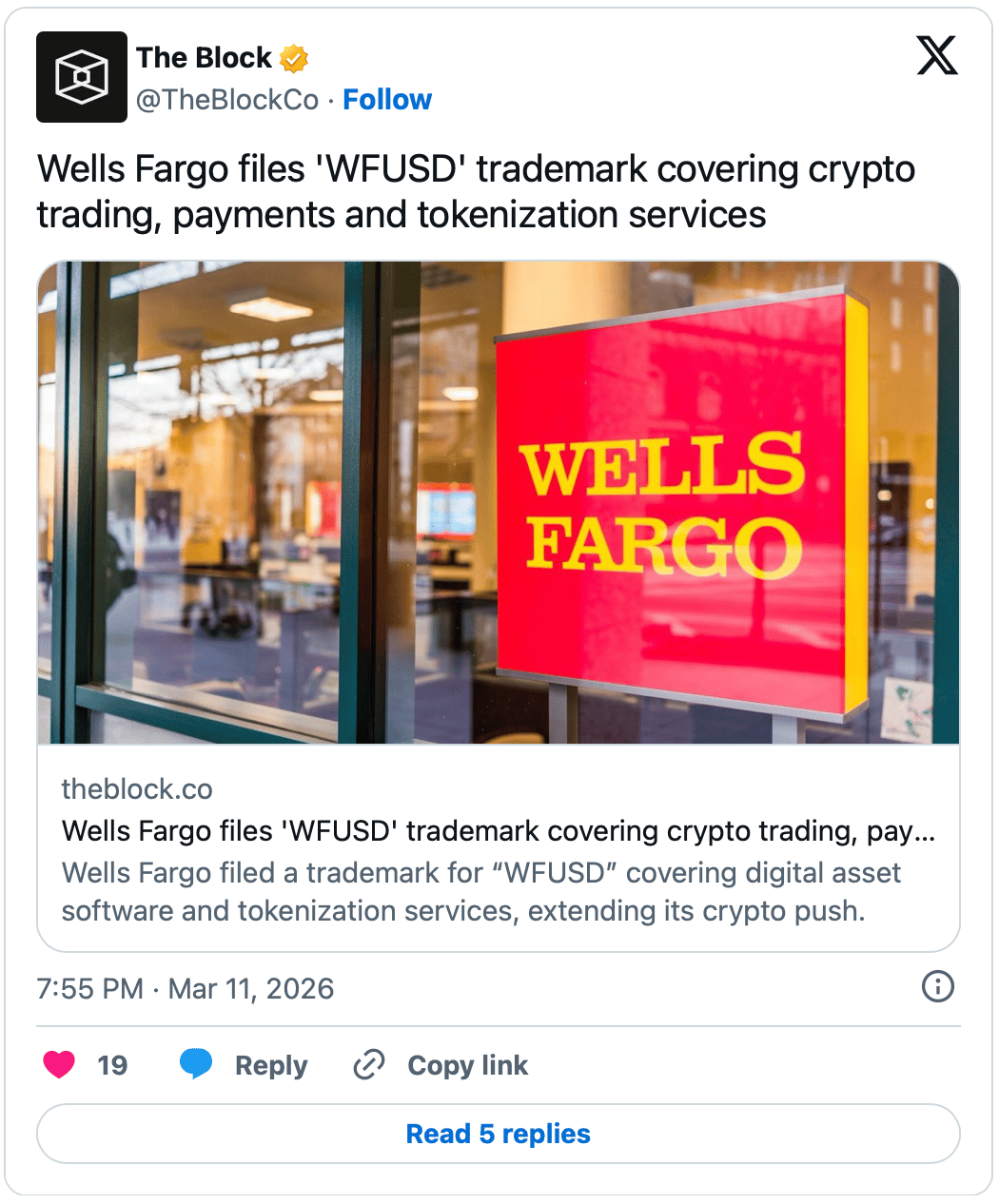
Crypto Economy: Large US financial institutions are increasingly onboarding to the onchain economy. Just recently, Wells Fargo has filed a trademark application for “WFUSD”, covering services related to crypto trading, digital payments, and tokenisation.
Data Marketplace: Kled is building a marketplace designed to source large-scale licensable datasets from verified contributors worldwide. The company says its data is being supplied to artificial intelligence developers, governments, and research institutions. Contributor payments are facilitated in part through Solana.
Human Proof: VeryAI has raised a seed funding round to palm-print biometrics with AI and deepfake detection aimed at confirming the authenticity of people and media online. Verification events are recorded on Solana using compressed accounts, which the company says reduce costs by roughly 5,000 times compared with standard accounts while enabling onchain proofs without exposing user data.
AI Monitoring: Crypto-powered prediction market platform Polymarket has partnered with Palantir Technologies and TWG Global to build a monitoring system aimed at detecting suspicious trading activity and potential market manipulation. The initiative comes as prediction markets attract greater attention from policymakers and investors as tools reflecting sentiment around elections, economic data, and sporting outcomes.
Caught In 4K
Weekly Take
Keks & Giggles

And that's a wrap!
You can reach me anytime over on 𝕏 or drop me a line.
Talk soon!
DISCLAIMER
None of this is financial advice. This newsletter is strictly educational and is not investment advice or a solicitation to buy or sell any assets or to make any financial decisions. Please be careful and do your own research. Lastly, please be advised that we discuss products and services from our partners from which our team members may hold tokens/equity.